Saturday, December 3, 2016

Exploring Ways to Develop My Leadership Capabilities

My  leadership philosophy, as described in the previous post, is "inspiring the best in each one" including and in fact beginning with myself. This entails intentionally looking for opportunities to grow and develop as a leader and an individual.
Given are the core capabilities that I would like to keep working on developing and some of the tools that I believe will help in this development process.

Emotional Intelligence: This is a core capability that (as stated by Daniel Goleman) encompasses Self Awareness, Self Regulation, Motivation, Empathy, and Social Skills. Each of these is critical to one's success as an individual first and as a leader. While the first three relate to personal skills, the last two relate to interpersonal skills. The tools that will help develop EI is self observation, gathering honest feedback from others around, analyzing and assessing this feedback and performing self reflection to gain insights. Based on the insights, develop a plan of action. If required, I would also help from a qualified executive coach who can guide me through the process and track progress. 

Change leadership: This core capability goes to the very heart of leadership. The ability of initiate, lead, and sustain change successfully will continue to be a cornerstone of leadership especially more so in an ever evolving environment. Every change initiative is going to be unique in its own way and it will be important to keep updated with the latest change management tools and theories and thinking through how these can be used to the unique situations of my organization. This will involve reading change literature and keeping updated about the various change efforts in organizations around the world, how they are being handled and what lessons can be learnt from their successes or failure.

Engaging the broader organization: One of the traps many leaders fall into is having their head so high in the sky that they forget to feel their feet on the ground. They limit themselves to their "inner circle" and while that may be important, missing out on engaging and connect with the broader organization also limits them from feeling the pulse of the organization and tapping into the vast resources and ideas that exist out in the broader organization. As a leader, I would like to keep learning ways to stay connected with the broader organization, to hear the voices of those at the grassroots level and to make sure that they can hear me and get a chance to establish a personal connection. In today's scenario, it could be through an organizational networking site such as Yammer or impromptu walk-throughs on the floor, but maybe in the future new ways will come into being. I would like to stay updated with these and take advantage of them.

Friday, November 18, 2016

My Leadership Philosophy

Philosophy is very much like a pair of glasses; when you put them on, everything you see takes on the color of your glasses. However, unlike glasses you cannot take off your philosophy and keep it aside, it is deeply ingrained within you, it’s a part of you. 
Besides having a strong business foundation, necessary educational qualifications and technical expertise, a leader must be ethical, acutely self aware and know his own leadership philosophy. A leader's charisma or traits can only take the organization so far because if s/he is not able to build a strong culture and pipeline of potential successors, the long term success of the organization will be jeopardized.

Leadership philosophy truly is the driving force or at the core of organizational success or failure. The image below shows how. Leadership philosophy drives the leader's beliefs and assumptions, which in turn drive leader decisions, actions, and behaviors. Organization culture is a result of leader's actions & behaviors, while organizational strategy creation is a key responsibility of the leader. Both of these dimensions ultimately determine organizational success or failure in the long term (and many times in the short term as well).


My  leadership philosophy is "inspiring the best in each one." In practice it translates into enabling each team member to be their best, to do their best, and bring their best to the table. It is based on the belief that everyone is capable of accomplishing great things; that, at the core everyone wants to do a good job, wants to be valued. This idea of inspiring the best in everyone begins with me. As a leader I model the way for my team to bring out their best. I believe that this will lead to empowered teams where everyone believes in others' as well as their own best self and strives to better themselves. It will create and sustain a strong culture of learning and growth because team members will not be compared to each other, but to who they were yesterday.

We live in a world that evolves constantly and requires us to evolve or adapt and respond quickly without having enough time to make elaborate plans. If an organization has to function efficiently and effectively in this kind of an ever changing environment and sustain its success, it needs a workforce that is capable of evolving, adapting and responding quickly without having to wait for their leader to "tell them" what to do. They need to believe in themselves, in the accuracy and righteousness of their own decisions and this does not happen overnight. It can only be possible through a culture of learning and growth and giving team members the opportunity to learn by making mistakes. This does not mean that there will be no boundaries or absolutely no consequences, because a leader cannot afford to be a blind idealist. It is absolutely necessary to have a healthy sense of realism as a leader and if something is not working, the courage to make tough choices. Therefore I do believe in establishing clear rewards and also what will not be acceptable.

As my team members strive to achieve sustained organizational growth and success, in the spirit of "inspiring the best in each one" I believe in providing them with the tools, information, opportunities, and the 'holding environment' for their growth, it is up to each member to realize their own potential in the process.

Sunday, November 13, 2016

Encouraging the Heart

To get where we are today or be who we are, we have all received encouragement at some point, hopefully many times throughout our journey. Encouragement relates to "Esteem" on Maslow's hierarchy of needs and note that it is placed before self-fulfillment, indicating that encouragement/approval/recognition is a building block to self-fulfillment.

Besides recognition/approval from family and friends, we also need it from our co-workers and managers. This HBR article highlights why appreciation at the workplace matters so much. One of the Daniel Goleman's quotes cited in this article is, “Threats to our standing in the eyes of others are almost as powerful as those to our very survival.” Reading this quote brought back flashes of many incidents where I was truly puzzled by why someone was 'acting so defensively' or 'came back aggressively (at times viciously)' when I was 'just trying to give some feedback'. It makes sense now, they felt that the remarks were a threat to their standing in someone else's eyes (the more public the remark, the more defensive or aggressive the response). Of course, their 'fight or flight' instinct was triggered. On the other hand, this also means that appreciating and encouraging someone makes them feel safe and valued and therefore triggers positive emotions. That's certainly reason to consciously appreciate and encourage more than giving negative feedback or finding faults.
Appreciation and encouragement, I make a slight distinction between the two (also based on the synonyms listed in the thesaurus). While appreciating refers to praising, applauding, admiring, and cherishing; encouraging refers to emboldening, reassuring, strengthening, and  cheering. These also form the basis of how I feel when encouraged; it generates self confidence and strength, and evokes the feeling of being valued, of the fact that others have faith in my abilities and trust me to do a good job. Encouraging others, whether in personal or professional spheres is a humbling, enriching, and rewarding experience, and one that evokes feeling of gratitude too. Humbling because it is about acknowledging another person's good work, contribution or behavior; making them feel valued, placing trust in their abilities, helping them realize their own strength, and being grateful in a way that who are fortunate enough to know them and/or work with them.
These are such positive and powerful actions that generate equally positive and powerful outcomes from the giver and the receiver that it is worth committing to encouraging others as much as possible. As the HBR article suggests, "we’re not fluent in the language of positive emotions in the workplace" or the "Heartfelt appreciation is a muscle we’ve not spent much time building" but if we are determined, it's not that difficult to become fluent in a new language if we practice enough or difficult to strengthen that muscle if we exercise it frequently. How about starting with right now?

 Disclaimer: All images are from google images and used for educational purposes only.

Friday, November 4, 2016

Enabling Others to Act

Two of my close friends are going through a transition, trying to move to the next level. They are in such different places in their lives, yet, strangely enough, they are in the same situation. One of them chose work over education due to circumstances at the time and believes he hasn't been able to be "successful". The other one went on to complete his masters, land his dream job, has done really well, but thinks he has "plateaued". I was kind of surprised to have similar conversations with two people on opposite ends of the spectrum. Both are looking for ways to be more, do more and grow and our conversations over the last few months have been quite insightful for all of us. 

Based on our conversations, here is a list of skills, attitudes, behaviors that we thought would benefit us:

  • Gratitude: All three of us agreed that the firstly, we need to be grateful for where we are in life. Each of us made a choice based on certain considerations and we are where we are as a consequence of those choices. Being thankful for the present also entails acceptance about the current situation. It may not be the best, but here we are, it's good and let's see where we need to go from here and what we need to do to make that happen. So we all agreed that showing gratitude was where we start.

  • Holistic Outlook: During our conversations, we realized how focused (obsessed?) we were with our professional lives and how much we thought about work & career. Given that we aren't growing any younger and there are so many things & places to experience, so much focus on work-life did not seem healthy. We agreed that we needed to look at our lives holistically and experience more of life, not just stay within the circle of our work-life. While this may seem counter-intuitive to finding ways to grow in your job, it really isn't. The varied experiences are going to enrich us even further, help us gain perspective of things, do things that are outside our comfort zone and that is going to transfer into our work-life too. Being more open to ideas, to people, taking initiative, showing the willingness to take risks are just a few of the attitudes and skills that we stand to gain

  • Education/Continuous Learning: While this was directly correlated to professional growth for my friend who had dropped out of college, the remaining two of us agreed that continuous education will help us expand our horizons too. So while friend #1 is out checking out the degrees and diplomas that can benefit his career, friend #2 is exploring his new passion, photography, he is exploring formal and informal learning options in this area. I went ahead and enrolled in a French language classes. Oui!

  • Energy management: All of this exploration and taking on new stuff can be tiring and time-consuming as well, so we ended up discussing ways of finding more time to do things. But of course that's not possible because there are only 24 hours in a day!  Friend #1 stumbled across this 2007 HBR article on Energy Management. As the article suggests "energy comes from four main wellsprings in human beings: the body, emotions, mind, and spirit. In each, energy can be systematically expanded and regularly renewed by establishing specific rituals—behaviors that are intentionally practiced and precisely scheduled, with the goal of making them unconscious and automatic as quickly as possible". Each of us decided to do practice a different ritual, friend #1 decided to practice awareness throughout the day and keeping a log every day; friend #2 who is in the "exploration" mode and therefore in a zone of uncertainty & transition decided to exercise everyday to calm his nervous and I decided to take up yoga.

We'll see where this journey takes us but we are certainly supporting each other and positively enabling each other to take a good look at our lives and make some small but critical changes.

Disclaimer: All images are from google images and used for educational purposes only.

Sunday, October 23, 2016

Challenging the Process

The act of challenging evokes images of a duel, an impending fight, or opponents up in arms; however, 'challenging' as a descriptive word brings to mind words like demanding, difficult, and requiring effort.
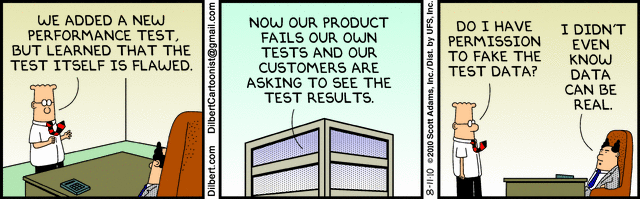
So what would 'challenging a process' encompass? According to Kouzes & Posner, to challenge the process "you search for opportunities by seeking innovative ways to change, grow, and improve, and you experiment and take risks by constantly generating small wins and learning from mistakes." 

Image source: http://lollypop.biz/media/1929/12d65a162c9f74809ba4205dda62c55a.jpg
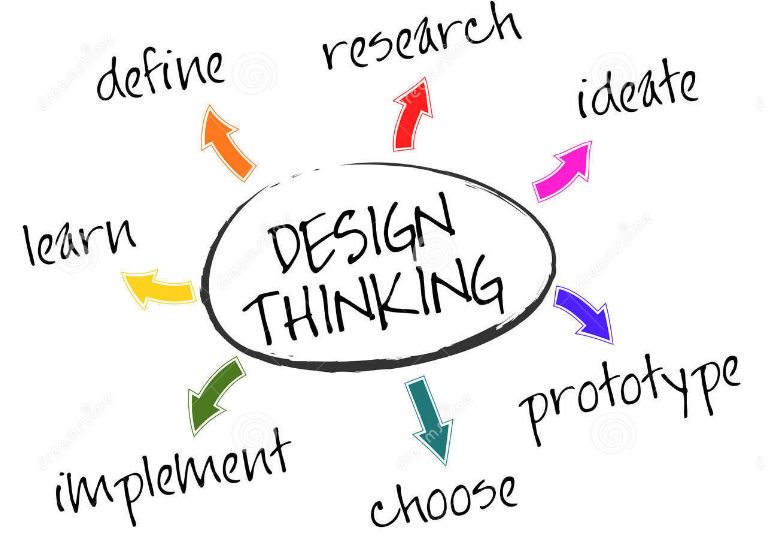
With an intention to find new ways to help my organization, I had a brain-picking session with a few colleagues about ideas and innovations we could use. Some ideas we tossed around were Appreciative Inquiry, Complex Adaptive Systems, Design Thinking & Action Learning. We zeroed in on Design Thinking for a variety of reasons elaborated further in this post, the most important ones being innovation, agility and learning from mistakes.

Image source: http://inchoo.net/wp-content/uploads/2016/06/design-thinking-3.png
These two websites provide the history or design thinking: Website_1 and Website_2. When we think of design, we automatically co-relate it with aesthetics; however Tim Brown, the guru of Design Thinking defines it as "...a discipline that uses the designer’s sensibility and methods to match people’s needs with what is technologically feasible and what a viable business strategy can convert into customer value and market opportunity." (https://designthinking.ideo.com/?p=49). However, he questions if there is a general definition of Design Thinking and whether it is useful to have one. This concept now has a wide variety of application besides just in the technological field.
Image source: https://thumbs.dreamstime.com/z/design-thinking-23211111.jpg
As the two websites about the history of Design Thinking suggest, it began as a method or a tool, but is now come to be a mindset. In his HBR article titled Design Thinking Comes of Age, Jon Kolko, VP of design at Blackboard; founder and director of Austin Center for Design; and the author of Well-Designed: How to Use Empathy to Create Products People Love (HBR Press, 2014) refers to Design Thinking as "applying the principles of design to the way people work" and identifies these principles as "empathy with users, a discipline of prototyping, and tolerance for failure (as) chief among them". He takes this a step further to having a "design-centric culture".

I think at this point, my organization would most benefit from having a design-centric culture. Using the evolution of design thinking explained in this blog cited earlier, my organization is probably doing the rounds between Participatory Design and User-Centered Design, maybe sometimes Service Design; but where we need to get to is Human Centered Design. 

Very Brief Summary of the Evolution of Design Thinking (Ref Blog: I Think Therefore I Design)
This transition is important given the changes that are taking place in organizations today (our client organizations), especially in the field of learning. Social learning is playing a big part in helping employees learn informally; employees are leveraging instant messaging to gain information and are surfing the internet as well for quick "how to" videos. Content curation is rising and will continue to do so, thereby increasing the need for creating learning solutions in collaboration with the users. The speed at which things change is so quick that there is hardly time to go through the normal development cycle to create solutions/products; stakeholders demand quick iterations which they can review and provide feedback on, so Agile is the need of the hour. What's more important that design thinking needs be a "culture" and not a department in the organization because all employees in my organization are involved in bringing the solution to life.

Implementing this innovation is sure to bring about disruption in the organization and its way of functioning but it will certainly help handle market uncertainty and complexity much better. Here, the design principle of tolerating failure (from Jon Kolko's article) will of utmost importance to the organization . As noted by Jon "a design culture is nurturing. It doesn’t encourage failure, but the iterative nature of the design process recognizes that it’s rare to get things right the first time." 
 My organization will probably have to remind itself of this principle once it is on the path of adopting Design Thinking. This also goes back Kouzes & Posner's point about challenging the process being all about taking risks and learning from mistakes.

Disclaimer: All images have been taken from google images and are used for educational purposes only.

Tuesday, October 4, 2016

Modeling the Way

We've all been there and done that, when it comes to modeling the way. We have, at times, been the one to follow the example someone set for us—an older sibling, parent, coach, or teacher; or we were the one setting an example for someone—our younger siblings, our kids, coworkers. Having been on both sides of the aisle, we know that modeling the way is all about "walking the talk." In their book, The Leadership Challenge, Kouzes & Posner make this insightful remark, "To walk the talk, you have to have a talk to walk." 


Now this is staring to seem like peeling back the layers of an onion! To be able to do what you say, first know what to say. To be able to know what to say, find out who you are what you believe in. So it all starts with values and beliefs. Especially for a leader, it is critical to know what those values and beliefs are because most times these may become the shared values and beliefs of the group or the organization at large. These shared values and beliefs in turn come to be seen as the culture of the organization. In fact, Edgar Schein, the guru of Organization Culture, says that the characteristic that is uniquely associated with leadership is the creation and management of culture. So in the larger scheme of things, when leaders are modeling the way, they really are setting an example for the entire organization and creating organizational culture. 


The debacle at Well Fargo that has recently come to light and created a (maybe permanent or very long term) dent in the reputation of the bank and it's customers' trust poses some critical questions about leadership, culture and modeling the way (rather how not to). This News_Article about the toxic sales culture at Wells Fargo is disturbing and brings forth so many questions about inspiring a shared vision and modeling the way. Is it possible that the vision that was "inspired" was too short-sighted and not based on the foundation of ethics? Was someone modeling the way, which as it turn out, was not the right way? If 5,400 employees were fired for indulging in unethical practices, is it even possible that leadership was not aware of the existence of these practices? Or did they fail to find their own voice and speak out for what they believe in? Was this incident the Halloween version of inspiring a shared vision and modeling the way?


On an individual level, each of us at times is called upon to model the way in our personal or professional lives. My role as an external-consultant-based-at-the-client-location required me to do this in several different ways. Firstly, I was representing my organization to the client, secondly, I was representing the client organization to its clients. I was a service provider to a service provider. To have to best represent both organizations and their values, to provide excellent customer service and to also balance the needs of my virtual team, required leading by example each day. It involved among many other things, working late nights, going the extra mile each time, and checking and rechecking my work, to make sure that the feedback I give to others is something that I have implemented for myself first. It is not easy to walk the fine line between being part of the client team and providing excellent customer service to my colleagues. But who said modeling the way was easy? 

The leaders who do model the way for their employees, customers, and shareholders walk many fine lines each day, setting examples, shining light on the way forward. And the times when they fail to do that, like in the case of Wells Fargo, the consequences are so severe that they may cause irreparable damage to the organization.


Disclaimer about images: All images have been sourced from Google images and used for educational purposes only.

Tuesday, September 27, 2016

Inspiring a Shared Vision


For the Org Design & Development class this Spring, we had to create a proposal on an Organization Development challenge or opportunity. Since my organization had just gone through the process of creating the new vision, mission and values, I chose to focus on the opportunity to internalize the new VMV for my organization. As part of the data analysis, I administered the Organizational Culture Assessment Instrument (OCAI) Survey to a few people in the organization and followed it up with a focus group discussion.


As seen in the snapshots above, while the Clan culture is dominant overall, the Hierarchy and Market culture are take precedence when it comes to measuring success, and employees are understandably confused and unhappy with that. This made for a very interesting discussion during the focus group where some colleagues shared their vision of the organization.  They envisioned for the organization to be more innovative, entrepreneurial, and creative. They also wanted the existing clan culture to be taken to the next level and have a team-based structure. Having been part of this organization for over 10 years, I could see where my colleagues are coming from and also where they are trying to go  with this vision. 

Traditionally, we have always been a market driven, results-oriented organization, whose major concern is to get the job done. This is  largely because our work is project based. This also makes operational excellence and competitive pricing a necessity . Both of these translate into limited scope for innovation because doing what we know takes less time and effort. Also, we are always striving to accomplish as much as possible with as few resources as possible. Coincidentally, this also leads to the same resources/employees working in the same team for long duration resulting in the dominant clan culture. Talk about going around in circles!

Given this history, my colleagues' desire for innovation seems justified. I actually believe that innovation will be of utmost importance to our survival and to creating a competitive advantage. This is because the environment and space (educational and corporate learning) we operate in has seen the emergence of so many disruptive trends that if we don't innovate, we might get left behind. And this applies as much internally (to employees) to the organization as much as it does externally (out in the market/competition). Employees who don't get an opportunity to upgrade their skills and knowledge and apply new trends and technologies are soon going to deliver products that will be outdated as well. And we are all well aware of what happens to organizations who can't get out of this type of a spiral: they are either acquired or they perish. So innovation seems like not just a smart choice, but a necessary choice that our leadership needs to move toward.

Their second vision about having a team-based structure makes complete sense given the strong Clan culture of the organization, the fact that we work on project basis, and that employees end up working in the same team for months if not years. There is tremendous rapport, sense of caring, openness and empathy that these team members share and they become such a cohesive unit that at the end of the project it is really difficult to single out one team member to credit for the success of the project or hold accountable for the failure of it. It is therefore only fair that they be judged as a team for their success or failure. This will encourage them even more to help and support each other to make the project a success and thereby achieve the one goal that the organization strives so strongly to achieve: client satisfaction and repeat business, eventually leading to a successful organization.


It is indeed interesting to note that the vision that so organically emerged in the minds of my colleagues relates at such deep levels to not just the sustainability of my organization but to its very existence and continuity itself. This fact highlights how important it is for a leader to be in touch with employees at the grass root level and to solicit their input when making strategic decisions, because the ideas that come from the employees "who are in the weeds" and "living it everyday" are many times far more practical than the plans on paper made behind glass doors and a true visionary leader understands the difference between the two. 

Disclaimer about images: All images have been sourced from Google images and used for educational purposes only.


Monday, November 30, 2015

Meaningful Ways For My Colleagues & Confidants To Support/Challenge My Learning


Being a professional in the field of learning and a self-professed life-long learner, it is no coincidence that learning plays a critical role in my day-to-day life. Whether it is improving a skill or acquiring a new good habit or just gaining new insights, I am always up for learning. I distinguish meaningful learning from mere acquisition of information/knowledge in the sense that learning results in change. This could be change in behavior, perspective, intention or action.

No matter how self-directed we are, there is only so much we can learn on our own. Our context, whether it is the workplace, family or society, contribute immensely to our learning because learning cannot take place in a vacuum. And I believe that the context provided by people around us contributes the most to what we learn. As captured in the infographic below, the top three ways that my colleagues and confidants can support and challenge my learning in meaningful ways are Feedback, Dialogue and Compassion. 


Feedback: And I am refering to constructive feedback here. My most important "aha" moments have been a result of the constructive feedback provided by colleagues and confidants who cared enough to observe something (behavior, action, words) and had valuable inputs to provide on how that something was either great and useful or could  be improved upon. Not only was this constructive feedback informative, but it was also though-provoking and many times has led me to challenge my assumptions and even bring about a transformation in me.

Dialogue: Another powerful way that some deep insights and learning has come my way is through engaging in dialog. This is a wonderful way of sharing perspectives, especially contrarian perspectives, and to really understand what the other point of view is and where it is coming from. Dialogue is the foundation of critical thinking because it brings to attention those perspectives that I may never have been able to get a peek into, had I not talked about it with that colleague or confidant. It literally provides "food for thought". Many times it has also been a way of affirming that I am not completely crazy and that my thoughts are coherent enough to make sense to someone other than me!

Compassion: This one may seem a little out of place; what's compassion got to do with learning in meaningful ways, right? For people who place a high value on success and cringe at failure, it is not easy to learn when we fail. We are already quite critical of ourselves for failing, so when the trusted colleague or confidant is also critical about something we failed to do or learn, it very becomes difficult to look at learning and/or failure positively. Here compassion is extremely critical to help people like me believe that it is okay to fail and that one can learn from failure. Compassion provides the encouragement we need to keep learning in spite of failure instead of giving up. It is also possible at times that for whatever reason, I may not be able to immediately grasp what my colleague or confidant is trying to communicate or "teach" and in times such as these, a little compassion will go a long way so that they don't give up on me, but more importantly, it will also ensure that I don't give up on myself!


Note: Images have been sourced from Google Images and have been used for educational purposes only.

Tuesday, November 17, 2015

“Getting it right!” a Top 5 List Describing “Best in Class" Learning Organizations


A Learning Organization, according to Peter Senge, is an organization "where people continually expand their capacity to create the results they truly desire, where new and expansive patterns of thinking are nurtured, where collective aspiration is set free, and where people are continually learning to see the whole (reality) together."  In a learning organization, "leaders are designers, stewards and teachers. They are responsible for building organizations where people continually expand their capabilities to understand complexity, clarify vision, and improve shared mental models." Whereas Organizational Learning as defined by Harvard Business School professor David Garvin, is the "process of creating, acquiring, interpreting, transferring, and retaining knowledge and using the new knowledge as a basis for responding to a changing environment."  Organizational learning is a process to ultimately become a Learning Organization.


The aspects that stood out to me in Senge's definition of the Learning Organization were:
  • Getting the desired results 
  • Nurturing new patterns of thinking
  • Leadership involvement
  • Continually learning to see the whole reality together
  • Investment in learning (although this point is not very explicit above)
 Every year, the Association for Talent Development awards organizations that "get it" and are "best in class." This link provides information not only about the names of award winning organizations for 2014, but also lists attributes that make them best in class. Most of the attributes resonate really well with the five points listed above.

  • Getting the desired results entails two aspects a) fulfilling individual goals b) achieving organization's strategic goals. This is possible only if there is alignment between individual goals and organizational goals, as well as between L&D objectives and activities and the business. As the article notes, best in class learning organizations "demonstrate enterprise-wide success as a result of employee learning and development" as well as "use the learning function as a strategic business tool to get results". This may takes various forms such as having robust talent development programs or building organizational capability by taking a systems approach to business needs and then training and developing talent to meet those business needs.


  • Nurturing new patterns of thinking goes to the heart of having a "culture of learning." It involves first and foremost, allowing new ideas to flow in, critically analyzing them, and then adopting the best parts of those ideas as new patterns of thinking and "doing". This is a big deal! Most organizations are so stuck with "this is how we've always done things around here" approach that they don't even entertain new ideas, let alone adopt them. This is especially true of successful organizations. However, it is really important for organizations to let employees explore new ways of thinking and doing to bring in new ideas that will help the organization adapt to the ever changing external environment. This attitude will foster innovation and we all know how important innovation is to scoring competitive advantage in today's environment.

  • Leadership involvement is crucial to any organizational initiative that hopes to see the light of the day. The idea of leaders being responsible for " building organizations where people continually expand their capabilities to understand complexity, clarify vision, and improve shared mental models" speaks to the role of leadership in creating the environment that provides opportunities for individual learning, team learning as well as systems thinking. It clarifies that leaders are not just relegated to the business and financial aspects, but involved in every aspect of learning and development.

  • Continuous learning to "see the whole reality together" comprises two aspects, a) continuous learning b) systems thinking. The idea here is to look at things from a systems perspective as a team or an organization. This is the heart of team learning and using the skills of reflection, inquiry, and dialog for group problem solving and learning. It allows the organization/team to gain insights which would not have been possible individually.

  • Investment in learning is a pre-requisite, and this does not have to be limited to monetary investment alone. The investment of time and effort, especially from leadership is equally valuable (one could argue that you can quantify time and effort investment and show a dollar figure), but the benefits derived from these investment certainly will be beyond tangible or quantifiable. When employees see their organization investing in their learning and development, in providing them opportunities to innovate, there is no limit to what an organization can achieve.

To the above five, I would add the following equally important practices that best in class learning organizations adopt:

  • Integrating learning with performance: In today's global workplace, when technology has become all pervasive and we are collaborating with team members from different parts of the world, we cannot afford to draw a line saying this is where "learning" ends and "work" begins. Organizations cannot afford to separate learning from performance, simply because that distinction does not exist.

  • Flawless execution: Many organizations and L&D functions are good when it comes to planning on paper, but falter during execution when faced with unanticipated challenges. Navigating these challenges and staying on course to make sure the initiative/s reap the desired outcome is absolutely essential to their success.


  • Measuring the impact of learning initiatives: Finally, there has to be data to support that the initiatives have really been successful and effective. And measurement does not refer to surveys asking users if they liked the "training," rather, it involves measuring the impact of the initiative on business results, because that is ultimately the goal of learning. Measuring often, but appropriately will also gather data that will help quantify "success" and generate more stakeholder buy-in for future initiatives.


References for link & images:

Book: The Fifth Discipline by Peter Senge

Monday, November 2, 2015

Learning Checklist for Fostering Meaningful Conversations in Teams


The Merriam-Webster1 dictionary defines conversation as "an informal talk involving two people or a small group of people" and "an oral exchange of sentiments, observations, opinions, or ideas."  The word "meaningful" as defined by Merriam-Webster 1 dictionary is "having real importance or value." From a team perspective then, meaningful conversations would mean "an exchange of sentiments, ideas, observations, or opinions that have importance or value." Note that I have deliberately left out the word "oral" and you'll see why later in on. Since we are focusing on fostering meaningful conversations in teams from a learning perspective, it becomes inevitable to discuss team learning.

Image 1

According to Peter Senge, Team Learning2 is one of the five disciplines for building a Learning Organization and involves using the skills of reflection, inquiry, and dialog for group problem solving and learning. Senge stresses on an organization's and group's ability to reflect collectively. However, just reflecting is not enough, there has to be collective dialog, what he refers to as reflective conversations. He even goes on to distinguish between discussion and dialog. Discussion is suggestive of a back and forth of ideas, where "the subject of common interest may be analyzed an dissected from many points of view provided by those who take part." However, in a discussion there is a sustained emphasis on winning, where one person's views are partially or completely accepted by the group. While discussion is valuable to a team to gain varied perspectives, it does not serve the purpose of team learning as well as dialog, which is "a free flow of meaning between people," and allows for a larger pool of common meaning, which cannot be accessed individually." The various uses of dialog as noted by Senge are:
  • Gain insights that would not have been achieved individually
  • Access a larger pool of common meaning
  • Explore complex difficult issues from many points of view
  • To make individuals the observers of their own thinking as well as to observe the collective nature of thought

These collective insights and contexts are what make conversations meaningful for a team.

Image 2
Another great tool to foster team conversations is Appreciative Inquiry3, a model for organizational development and change developed by David Cooperrider, professor at the Weatherhead School of Management at Case Western Reserve University. Based on the assumption that "every organization has something that works right," Appreciative Inquiry focuses on discovering, understanding, and fostering innovations in social organizational arrangements such as teams and processes. Instead of negation, criticism and spiraling diagnosis, there is discover, dream, design and destiny. One can see why Appreciative Inquiry can help foster meaningful conversations in teams.

Image 3
Besides the above, of course mutual trust, respect, a positive environment and belief in individual and team potential will form the basis of meaningful conversations in teams.


References:

Tuesday, October 13, 2015

Why Organizations Are Approaching Learning All Wrong!

"The only sustainable competitive advantage is an organization's ability to learn faster than the competition." ~ Peter Senge. 

Learning is one of the most important attributes to gain competitive advantage, yet the most ignored in some organizations. These organizations really do approach learning all wrong. They confuse Training with Learning.  The fundamental difference between the two is that Training refers to a planned event, an external activity; while Learning is a basic human need, is on-going, internal and happens everyday. Both are not synonymous.

Difference Between Training & Learning
Many organizations equate conducting a few classroom sessions or making employees take a few online modules to organizational learning. This is a very limited view of training itself, let alone learning. Learning encompasses a much broader and complex concept. In this interesting interview of David Garvin and Amy Edmonson, Harvard Business School professors and coauthors of the HBR article Is Yours a Learning Organization? David defines organizational learning as "creating, acquiring, interpreting, transferring, and retaining knowledge and using the new knowledge as a basis for responding to a changing environment."1 David makes two points, the first is what learning is, and the second is about what learning does.

Going by David’s first point, learning is a very broad and complex concept that encompasses various activities enabling employees to sustain and enhance their performance, train peers, improve processes, and learn new skills; it also enables organizations to perform well in the market and achieve their strategic goals. This definition of learning connects learning to performance. So you see how training can certainly fit into the scheme of things, and is really a cog in the wheel of organizational learning. David’s second point about what learning does in terms of enabling organizations to respond to the changing environment using new knowledge is what creates the competitive advantage.

If the organizational strategy is to gain competitive advantage, putting learning first should follow naturally as a business decision. However, when it comes to learning, most discussions focus on training events and questions such as "how much will this cost?" and "for how long with employees be away from their work?"  Organizations that focus solely on these questions lack strategy/vision for Learning. Smart organizations that use the Balanced Scorecard know that Learning and Growth is one of the leading indicators not only for intangibles such as internal processes and operations but also on tangible customer and financial metrics. They realize that like other business initiatives, learning needs to align with the vision, mission and culture of the organization.

When asked about core organization learning capabilities, Peter Senge, author of The Fifth Discipline, discusses three capabilities in this short_video. The first one is fostering a vision for learning. Each organization needs to crystallize its vision for what it wants to intentionally achieve through learning.


Once this vision is put into action, he stresses that it is important for the organization to have the capability to reflect collectively on what has worked and what hasn't and to have reflective conversations as groups/organization. This really goes to the heart of having a Learning Culture and giving employees the permission to make mistakes and learn from their mistakes. 

The third capability Senge stresses is systems thinking, where people from different parts of the organization, having different points of view come together to collectively see the complexity and interconnectedness between various moving parts in an organization.


The lack of systems thinking sometimes makes organizations fall into the trap of leading with technology instead of strategy. In a hurry to jump onto the Enterprise 2.0 bandwagon or striving to keep up with the latest technology, organizations hurriedly implement Web 2.0 tools only to realize that they did not really think through the planning, support, development and implementation. Employees suddenly find themselves bombarded with SharePoint, Yammer, Wikis, Blogs, Intranet and don't know what tool would best serve their immediate need.

The organization that just spent that hefty budget on implementing these tools is now stuck with either too many tools or tools that employees can't use or don't know how to use. So while Enterprise 2.0 can be a very productive concept, it needs to be dealt at the strategy level first than the technology level.

To summarize, the right way to approach organizational learning is to align learning with the organization's strategy, have a clear vision of what the organization will accomplish through learning, and integrate learning with performance. Finally, when implementing tools for learning and collaboration approach it systematically, not just technologically and remember to think through planning, support, development and implementation. By the way, here is a list of organizations that are doing it right!


1 https://hbr.org/2008/02/harvard-business-ideacast-83-l/.
Disclaimer: All images have been sourced from Google images and have been used for educational purposes.